
The Intriguing Tale of Gilgamesh
Insights into History, Myth, Culture, and the Human Spirit
Part 1: Historical Perspectives – Unearthing the Past
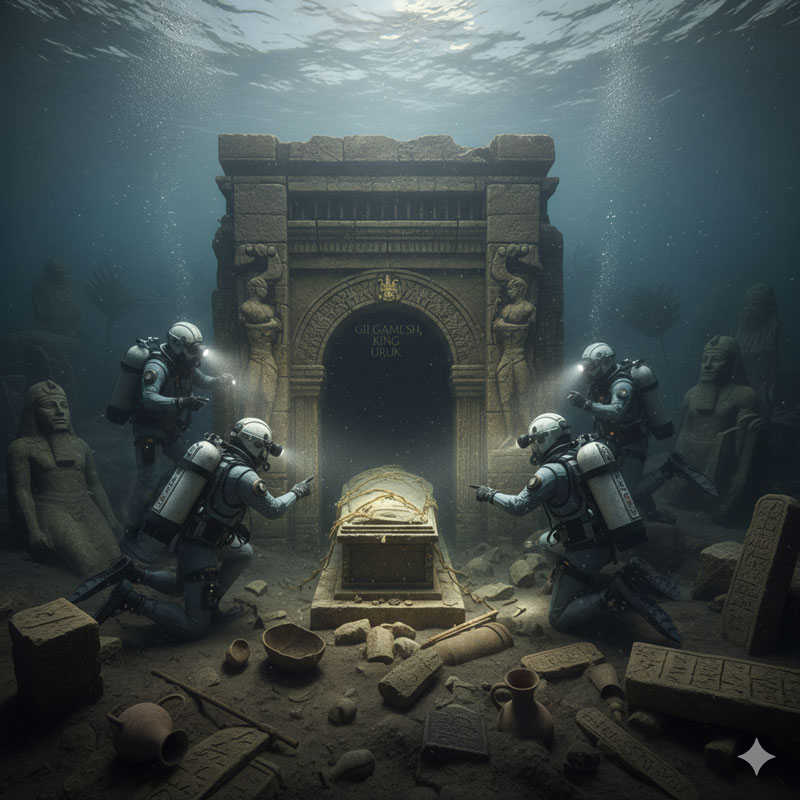
The discovery of Gilgamesh’s tomb beneath the Euphrates River emerges as a rare confluence of historical significance and archaeological triumph. This revelation has sent ripples across the academic world, offering a unique opportunity to deepen our understanding of ancient Mesopotamia and its mythological past.
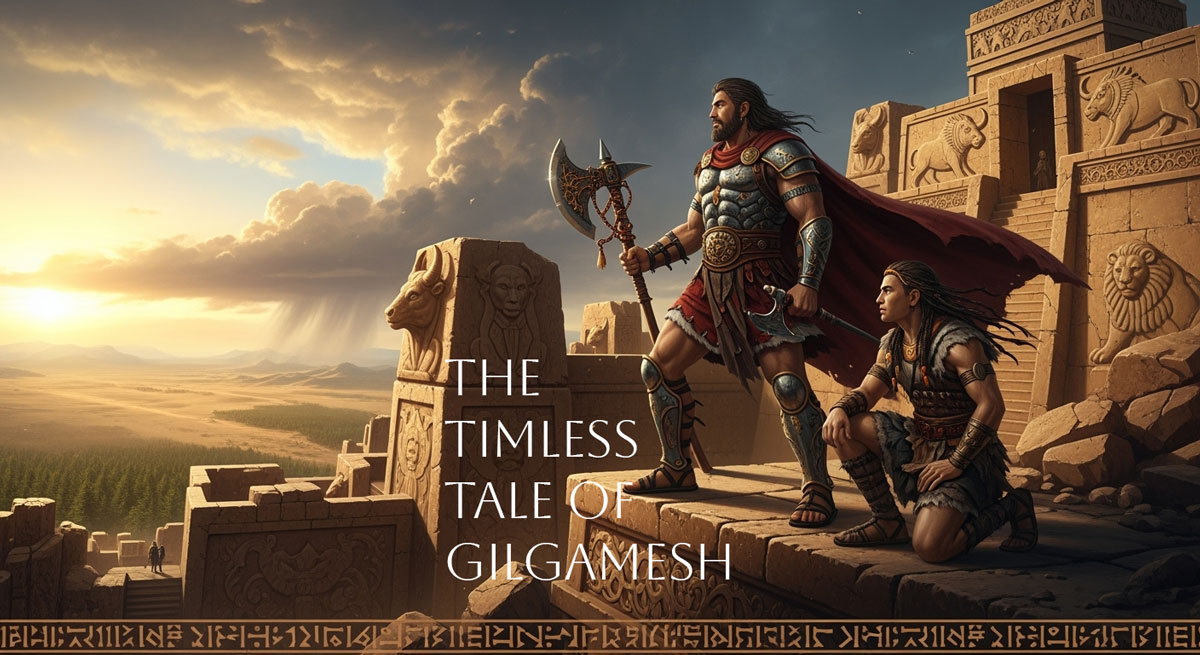
Gilgamesh, often seen as a fusion of myth and history, is known widely through the Epic of Gilgamesh, one of humanity’s earliest pieces of literary work with its core theme of man seeking immortality. Until now, his existence was primarily tethered to this epic and scattered historical references, such as the Sumerian King List.
In the King List, Gilgamesh is depicted as a semi-divine ruler associated with the city of Uruk. The list describes him as a king of great fame, ruling for 126 years. The recent unearthing, however, provides compelling evidence of Gilgamesh’s historical presence, marking a shift from narrative myth to established historical fact.
The tomb itself showcases the grandeur of Sumerian architecture and artistry. Built with remarkable craftsmanship, the stone structure is adorned with intricate designs and engravings depicting iconic scenes and deities from the era. Such detailed preservation, aided by the region’s climatic conditions, offers historians tangible links to a civilization that laid foundational stones for future societies.
Nature’s role in this discovery was unexpected yet crucial. The Euphrates’ retreat exposed a site long hidden beneath its waters, offering a serendipitous window into the past. Initial examinations have uncovered a plethora of artifacts including ceremonial objects, weapons, and adornments crafted from precious metals. These items are more than mere objects; they are silent narrators of history, each piece a testament to the era’s social, cultural, and political milieu.
The presence of such items allows historians to explore the dynamics of Sumerian governance and socio-cultural structures. Gilgamesh’s reign, supported by these newfound evidence, points to a ruler hailed for his might and wisdom, yet surrounded by myths that elevated him to near-divine status. Scholars can now delve deeper into the nuances of his kingdom, providing insights into the administration, diplomacy, and daily life of ancient Sumer.
In conclusion, the historical uncovering of Gilgamesh’s tomb is not simply an addition to archaeological records but a transformative event, bringing significant clarity to the historical world. It bridges centuries of speculative knowledge, providing certainty and context that forever alters our understanding of early human civilization. As research continues, these findings promise to rewrite historical narratives, illuminating the intricacies of ancient traditions and governance.
Mythological Dimensions – Ratifying Key Elements of the Myth
The revelation of Gilgamesh’s tomb is a seismic event, a bridge between the celestial and the terrestrial, where the boundaries of myth and reality dissolve into a singular, awe-inspiring truth. Gilgamesh, the demigod-king whose name echoes through the annals of world mythology, has long been enshrined as a figure of divine and mortal duality—a hero whose exploits, immortalized in the Epic of Gilgamesh, have shaped humanity’s understanding of its own mythic origins. The discovery of his resting place is not merely an archaeological triumph but a confirmation of the epic’s sacred resonance, a tangible link to the ancient world’s spiritual and narrative consciousness.
The Epic of Gilgamesh, one of the oldest surviving literary masterpieces, is a tapestry woven with threads of human ambition, divine intervention, and the eternal quest for immortality. Gilgamesh’s odyssey, alongside his feral-turned-celestial companion Enkidu, is more than a hero’s journey—it is a mythic exploration of the human condition, a testament to the struggle against mortality and the search for meaning in a universe governed by gods and fate. The discovery of his tomb amplifies the epic’s mythological dimension, grounding its celestial themes in the earthly realm while elevating its narrative to a plane where myth and history converge.
Historically, the Epic of Gilgamesh has been viewed as a fusion of allegory and potential reality, with Gilgamesh’s deeds serving as parables of human virtues and vices. Yet, the excavation of his tomb transcends this duality, offering a sacred site where myth is enshrined in stone. The tomb itself, adorned with intricate engravings and mythological motifs, is a testament to the cultural reverence for Gilgamesh as both a mortal king and a hero touched by the divine. These frescoes and inscriptions, depicting scenes that mirror the epic’s mythic exploits, serve as a visual scripture, a chronicle of a hero’s divine journey that may have roots in actual events.
This convergence of myth and reality enriches our understanding of how ancient societies used storytelling not merely as entertainment but as a sacred act—a way to codify their deepest beliefs, values, and connections to the divine. The tomb becomes a portal, a place where the mythic and the historical intertwine, offering scholars and enthusiasts alike a fresh lens through which to view the epic’s origins and its enduring power.
Moreover, the discovery invites a re-examination of the epic’s genesis, revealing it as a cornerstone of a broader mythological tradition. Parallels between Gilgamesh’s story and similar myths in neighbouring cultures—such as the Sumerian, Babylonian, and Assyrian traditions—open new avenues for cross-cultural exploration. These alignments illuminate the shared ethos of early human civilizations while highlighting the unique paths each culture took in interpreting the divine and the heroic. The tomb thus becomes a nexus, a point of convergence where the mythic narratives of the ancient world intersect, revealing a shared lineage of storytelling that transcends borders and epochs.
In conclusion, the discovery of Gilgamesh’s tomb is a moment of profound mythological significance, a testament to the enduring power of narrative to bridge the celestial and the terrestrial. It challenges our preconceptions of myth as mere fiction, revealing it instead as a sacred vessel through which ancient societies preserved their connection to the divine and their understanding of the human experience. As scholars continue to unravel the mysteries of this tomb, they uncover not just the story of a hero but a mythic tapestry that binds humanity’s past, present, and future—a reminder that the stories we tell are the threads that weave the fabric of our shared existence.
Cultural Insights – Glimpses into Sumerian Life
The excavation of Gilgamesh’s tomb is not just an archaeological triumph but also a cultural revelation, shedding light on the intricate tapestry of life in ancient Sumer. Known as the cradle of civilization Known as the cradle of civilization, Sumerian culture provides a unique lens into the development of societal structures, artistry, and cultural priorities that laid the groundwork for future civilizations. The cultural artifacts uncovered in the tomb of Gilgamesh offer profound insights into the traditions, beliefs, and everyday life of the era.
A focal point of the discoveries is the array of ceremonial objects and intricate jewellery that adorned the burial chambers. These items, crafted with precision and artistic flair, reflect the Sumerians’ advanced metallurgical skills and their appreciation for aesthetic beauty. The presence of such artifacts indicates the importance of rituals and ceremonies in Sumerian society and highlights the cultural reverence they held for their rulers, often seen as intermediaries between the divine and the mortal realms.
The ceremonial weapons found in the tomb suggest a society that valued military strength and leadership. These artifacts point to the role warfare and conquest played in the expansion and consolidation of power under Gilgamesh’s rule. The careful crafting of these weapons not only served practical purposes but also symbolized the might and authority of the king, elevating his status among contemporaries and within historical narratives.
In addition to weaponry, the inscriptions and frescoes within the tomb provide a window into the Sumerian worldview—spiritual beliefs, religious practices, and the pantheon of deities they worshipped. Detailed engravings depict scenes of ritualistic sacrifices and offerings to gods, underscoring the spiritual life that underpinned Sumerian society. These images reveal a complex tapestry of beliefs that emphasized a harmonious balance between humans and the divine, demonstrating how religious practices influenced aspects of governance and public life.
The findings also contribute to our understanding of social hierarchies within Sumerian civilization. The burial site, marked by its grandeur, illustrates the wealth and opulence associated with royalty. It provides evidence of a structured society where artisans, craftsmen, and labourers worked together to honour their ruler’s legacy through monumental constructions and artistic expressions. This collaborative effort reflects the societal organization and distribution of labour necessary to maintain such a civilization.
The preservation of these cultural artifacts offers modern society a chance to reconnect with its ancient roots, drawing parallels between past and present cultural expressions. The careful study and interpretation of these findings foster greater appreciation and respect for early advancements in art, society, and governance, highlighting the cultural achievements that have shaped human history.
In conclusion, the tomb of Gilgamesh provides an extraordinary glimpse into the cultural richness and complexity of ancient Sumer. The artifacts and engravings unearth a world of sophisticated artistry, religious significance, and societal structures, painting a vivid picture of life over four millennia ago. As researchers continue to analyse these cultural treasures, they enhance our understanding of the foundations of civilization, reminding us of the enduring legacy of early societies and their contributions to the tapestry of human history.
Spiritual and Psychological Impact – Timeless Reflections
The discovery of Gilgamesh’s tomb transcends its archaeological significance, resonating deeply on a spiritual and psychological level. The narrative of Gilgamesh speaks to universal themes of human existence, addressing existential questions that have persisted across cultures and eras. These themes, articulated in one of history’s oldest epics, invite contemporary reflection on life, death, and the quest for meaning.
Central to the Epic of Gilgamesh is the hero’s journey—a quest for immortality that ultimately culminates in the acceptance of human mortality. This theme echoes through time, resonating with modern audiences who grapple with the same fundamental questions about the nature of life and death. Gilgamesh’s story provides a framework for exploring these timeless issues, challenging individuals to confront their own mortality and the impermanence of existence.
In rediscovering Gilgamesh’s narrative, his quest for eternal life serves as a metaphor for the human experience. The tale invites introspection on the value of earthly achievements, the significance of human connections, and the pursuit of lasting legacies. This exploration encourages a deeper understanding of our ambitions and fears, prompting discussions about what it truly means to live a fulfilled life.
The psychological themes within the epic also explore friendship, loss, and personal growth, mirroring the human condition that remains relevant today. Gilgamesh’s bond with Enkidu, his profound grief at his friend’s passing, and his subsequent journey to understand life’s purpose are narratives that invite empathy and reflection, underscoring the power of relationships as drivers of personal transformation.
Moreover, the epic serves as a source of philosophical inquiry and spiritual exploration. It challenges readers to consider the interconnectedness of humanity, prompting a reevaluation of values and beliefs. By engaging with these timeless stories, individuals can find meaning and guidance, drawing upon ancient wisdom to navigate contemporary challenges.
Psychologically, storytelling offers therapeutic benefits. The narrative structure allows individuals to process personal experiences through allegorical exploration, facilitating catharsis and emotional healing. The epic’s enduring themes initiate dialogue that transcends cultural and temporal boundaries, fostering shared understanding and solidarity among diverse groups.
Conclusion:
The discovery of Gilgamesh’s tomb rejuvenates the profound connection between ancient myth and modern human experience. It reminds us that the fundamental questions about life, death, and our purpose have persisted through millennia, and that ancient stories like Gilgamesh’s continue to offer insights and comfort for navigating our own existential journeys.
This rediscovery encourages contemporary society not only to view Gilgamesh as a legendary figure but also as a symbolic archetype representing our collective struggle to find meaning in mortality. Gilgamesh’s quest, his fears, and eventual acceptance serve as a mirror for our own internal battles—prompting introspection and fostering resilience.
Furthermore, the myth underscores the importance of friendship, legacy, and the pursuit of knowledge—values that remain relevant and vital today. As we reflect on this legendary narrative, it becomes clear that ancient stories are not distant relics but living dialogues that continue to shape our understanding of the human condition. They inspire us to confront our fears, embrace our mortality, and seek a sense of purpose that transcends individual lifespan.
In essence, the tomb’s unearthing rejuvenates the timeless spiritual dialogue that has existed since the dawn of civilization. It invites us to view ourselves within the grand tapestry of human history, recognizing that our struggles, hopes, and aspirations are part of a shared legacy that binds past, present, and future. The story of Gilgamesh, once shrouded in legend, now stands as a tangible reminder of our enduring quest for meaning, echoing through the corridors of time for all to hear.

0 Comments