
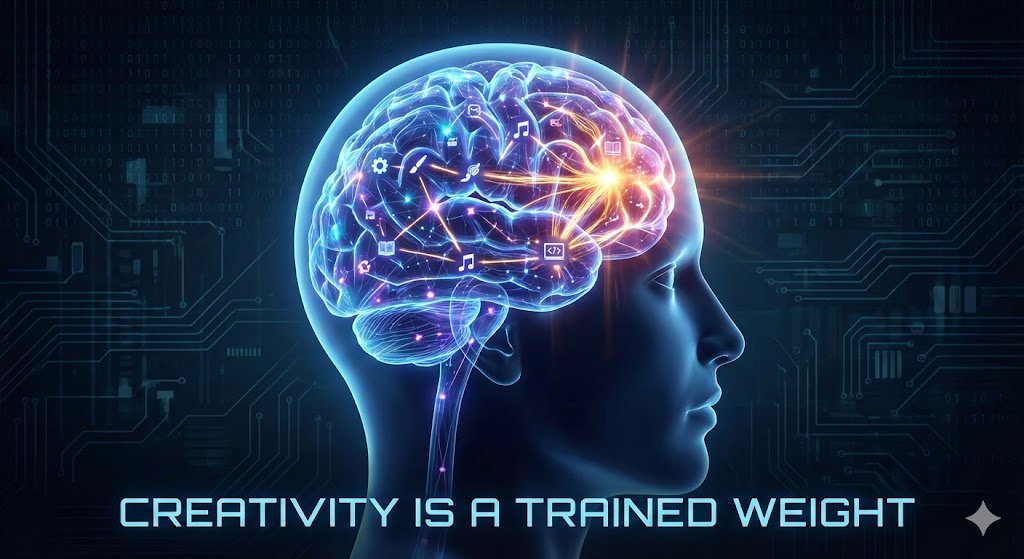
Is human creativity a result of engineering via deliberate practice? This paper challenges the pervasive “Romantic Myth” of creativity—the notion that genius is an ontological gift bestowed upon a select few through lineage or mystical intervention. By synthesizing cognitive psychology with principles of deep learning, we argue that creativity is an emergent property of rigorous skill development and combinatorial optimization. Just as a generative model requires high-quality datasets and extensive training epochs to navigate its latent space, the human “creative” output is the result of “deliberate practice” (Ericsson, 2016) and the refinement of internal heuristics. We explore the “componential theory” (Amabile, 1983) and “computational creativity” (Boden, 2004) to demonstrate that what we perceive as a “spark” is actually the final iteration of a complex, skill-based search algorithm. This shift from “nature” to “nurture-as-optimization” empowers individuals by framing creativity as an accessible, engineerable capacity rather than a static genetic lottery.
The Death of the Muse: Creativity as a Trained Architecture
For centuries, humanity has outsourced the origin of its best ideas to the divine. We speak of “The Muse,” “flashes of insight,” or “natural-born talent,” as if creative output were a zero-shot inference from a void. But for those of us who build and tune deep neural networks, this mystical framing feels increasingly like a legacy bug in our cultural software.
The reality is far more grounded—and far more exciting. Creativity is not a gift; it is a learned optimization strategy. It is the byproduct of high-resolution domain knowledge coupled with the cognitive “compute” to recombine that knowledge in novel ways.
The Myth of the “Natural” Creative
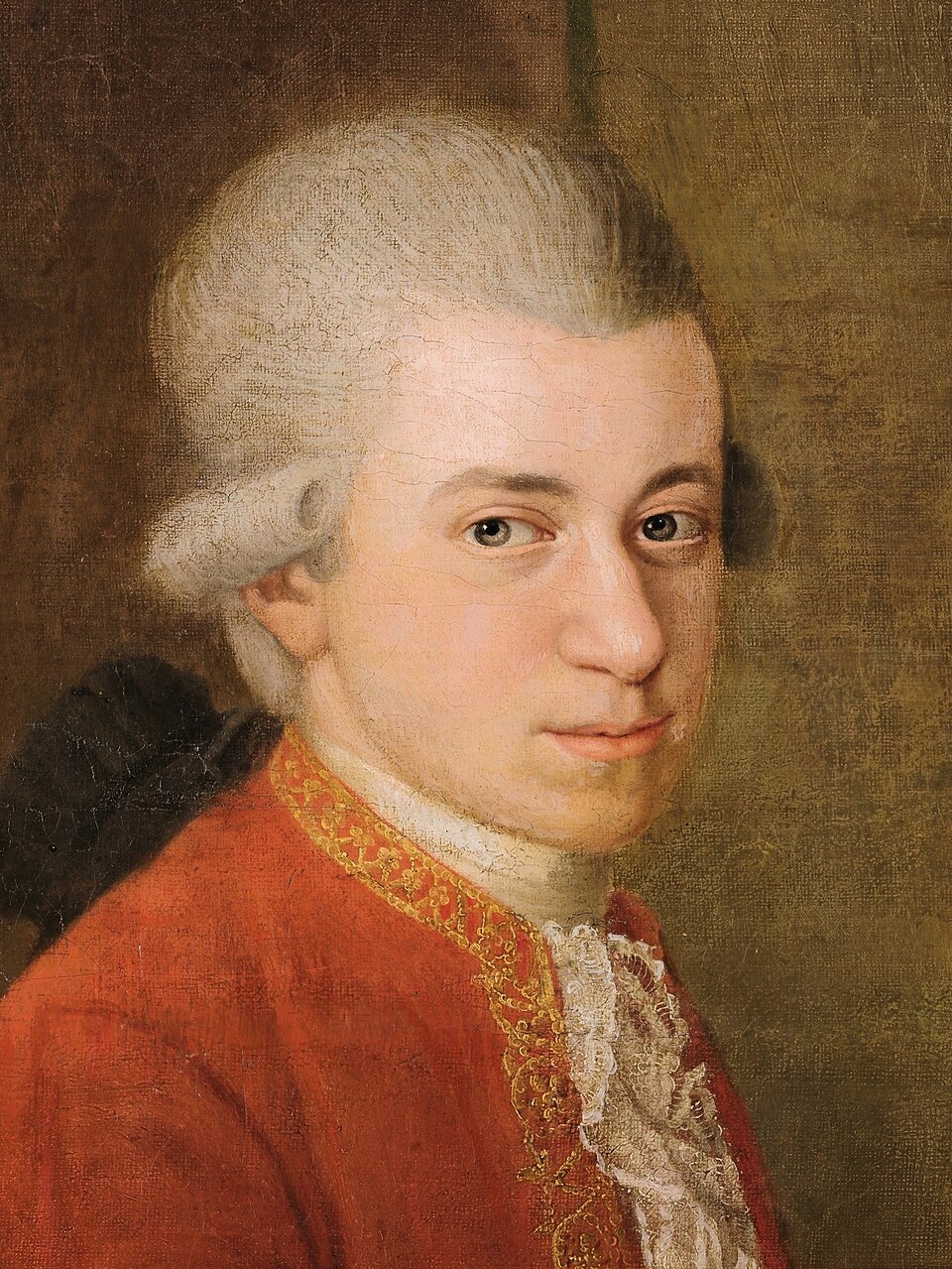
The “Great Man” theory of history suggests that geniuses like Mozart or Da Vinci were born with a pre-configured architecture that ordinary humans lack. However, longitudinal studies on expertise suggest that “talent” is often a retrospective label we apply to the results of early-onset, high-intensity training.
In deep learning terms, no model—no matter how many parameters it has—produces meaningful output without a training phase. Human “lineage” might provide a slightly more efficient learning rate or a specialized loss function, but without the data (skill development), the weights remain random.
The Combinatorial Engine
Margaret Boden (2004) defines creativity not as the creation of something from nothing, but as the exploration and transformation of conceptual spaces. This mirrors the way a Variational Autoencoder (VAE) navigates a latent space. To find a “creative” point in that space, the model must first understand the underlying distribution of the data.
- Domain Skills: These are your training data. Without them, your latent space is empty.
- Technical Proficiency: This is your resolution. The better your skills, the more “dimensions” you can navigate.
- Creative Output: This is the successful interpolation between disparate points in that space.
Creativity is essentially a heuristic search through a combinatorial explosion of possibilities. The more skilled the practitioner, the more efficient their search algorithm becomes (Newell et al., 1958).
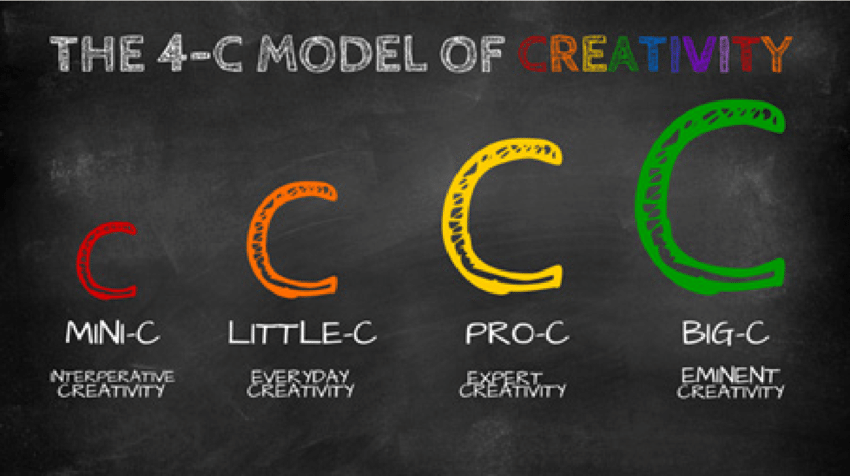
The Four-C Model: Creativity Scaling Your Model
In cognitive psychology, the “Four-C” model (Kaufman & Beghetto, 2009) categorizes creativity from “mini-c” (personal learning) to “Big-C” (world-changing genius). The transition through these stages is purely a function of epoch count and data diversity.
| Creative Stage | AI Parallel | Human Requirement |
| Mini-c | Initializing weights | Foundational learning/Curiosity |
| Little-c | Fine-tuning on a niche | Consistent hobbyist practice |
| Pro-c | SOTA Performance | Professional domain expertise |
| Big-C | Paradigm-shifting architecture | Decades of deliberate practice |
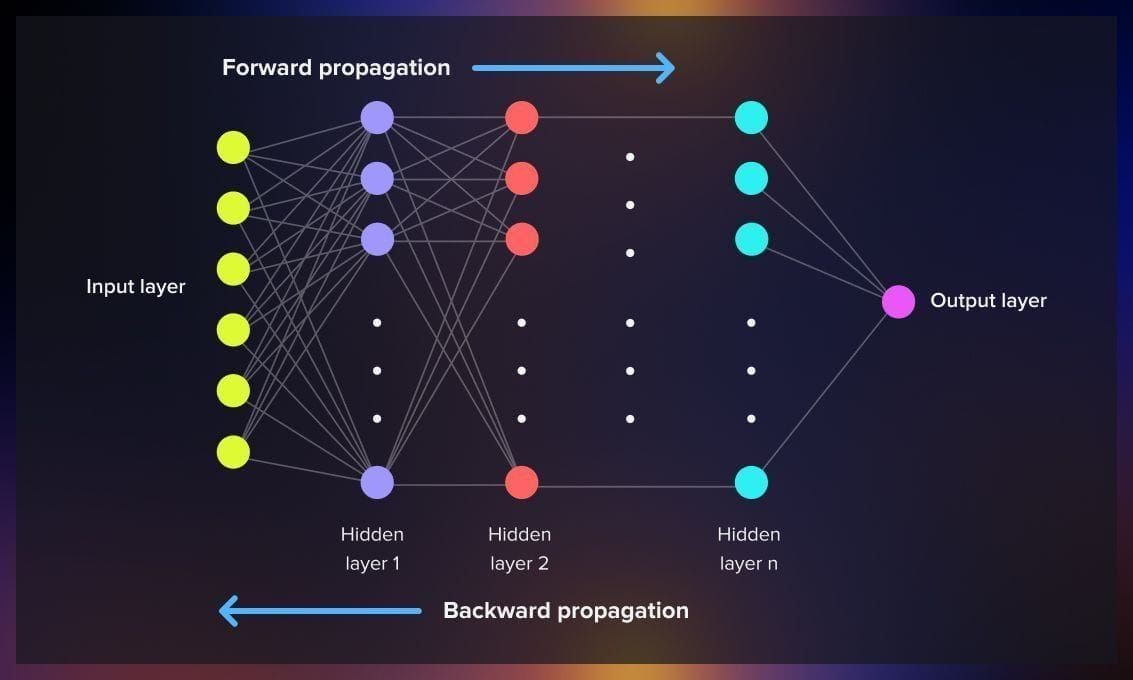
Deliberate Practice: The Gradient Descent of Mastery
Anders Ericsson’s (2016) research on “deliberate practice” provides the strongest evidence against mystical intervention. He argues that the brain undergoes physical, structural changes in response to specific, goal-oriented training. This is biological backpropagation. When we push ourselves to the edge of our capabilities, we encounter “error signals.” By correcting these errors, we update our “neural weights,” refining our internal model of the craft.
If creativity were truly mystical, practice would have diminishing returns. Instead, we see that the most “creative” individuals are those who have mastered the “priors” of their field so thoroughly that they can predict—and then subvert—the next logical step in a sequence.
Why This Matters for the Algorithmic Age
In an era where Generative AI can produce “art” in seconds, the human differentiator is no longer the output itself, but the intent and the architecture of the skill behind it.
We must stop waiting for a lightning bolt of inspiration. The “spark” is a lie. There is only the work, the refinement of the cost function, and the relentless iteration toward a more sophisticated latent space. Creativity is not a lottery; it is an engineering challenge.
References
- Amabile, T. M. (1983). The Social Psychology of Creativity. Springer-Verlag. (The foundational text on the componential theory of creativity).
- Boden, M. A. (2004). The Creative Mind: Myths and Mechanisms. Routledge. (Explores the computational nature of creative thought).
- Csikszentmihalyi, M. (1996). Creativity: Flow and the Psychology of Discovery and Invention. HarperCollins.
- Ericsson, A., & Pool, R. (2016). Peak: Secrets from the New Science of Expertise. Houghton Mifflin Harcourt. (The definitive work on deliberate practice).
- Kaufman, J. C., & Beghetto, R. A. (2009). “Beyond Big and Little: The Four C Model of Creativity.” Review of General Psychology.
- Newell, A., Shaw, J. C., & Simon, H. A. (1958). “Elements of a Theory of Human Problem Solving.” Psychological Review. (Early link between human thought and algorithmic processing).
- Runco, M. A. (2004). “Creativity.” Annual Review of Psychology.
- Sawyer, R. K. (2011). Explaining Creativity: The Science of Human Innovation. Oxford University Press.
- Simonton, D. K. (1997). “Creative Productivity: A Predictive and Explanatory Model of Career Trajectories and Landmarks.” Psychological Review.
- Wiggins, G. A. (2006). “A Creative Multi-Agent System for Music Metre Perception.” Journal of Creative Behaviour. (Discusses the cognitive framework for creative systems).
Target communities who may be benefit from reading this post
The Algorithmic Architect (ML Engineers & Data Scientists)These are your primary stakeholders. They spend their days tuning hyperparameters and monitoring loss curves.
The Systematic Creative (Tech-Savvy Designers & Founders)This group is tired of the “starving artist” trope and the “wait for the muse” advice. They are builders who view creativity as a tool for problem-solving.
The Peak Performance Community (Cognitive Hackers & Intellectuals)These readers are obsessed with the “science of excellence.” They follow the work of people like Andrew Huberman or Anders Ericsson.

Worth reading and food to explore further. It’s interesting to note the idea of creativity – it’s not from nothing but from conceptual training. You have fed the brain to explore further. Thank you very much. God bless you.
Thanks for you observation.
The mind is not in a ‘Tabla Rasa’ mode from the time we are born but creativity is a process of deletion and acquisition. In my blog you would read about what is known as ‘Biological back propogation’ this is evolving bacward to a more sustainable state.
Isit true? What about people handling media any immediate result? Can all these be fake?
If you note the content of the blog, we are not qualifying the nature of the final outcome of the process of creativity.
Here we are providing a process of continuous achievement and it is assumed towards a beneficial goal for humanity