
Abstract
This paper explores the intersection of Rupert Sheldrake’s Theory of Morphic Resonance and the mathematical precision of spontaneous natural order, using the snowflake as a primary case study defining Cosmic Memory. By synthesizing Chaos Theory, the Fibonacci sequence, and the Golden Ratio, we challenge the reductionist view that beauty is an accidental byproduct of physics. Instead, we propose that nature possesses an inherent “habit” of form—a collective memory that guides matter from chaos into structural elegance. Drawing on Justi Andreasen’s insights, the paper argues that the intelligibility of the world is a result of formative causation acting through morphic fields, where the “Strange Attractors” of chaos theory manifest as the “Morphic Fields” of biological and physical memory.

The Nervous Mind and the Snowflake
As Justi Andreasen (2026) poignantly observes, snowflakes make the modern mind “nervous.” We reside in a cultural moment where we are caught between two equally unsatisfying explanations: the “blind watchmaker” of pure randomness and the “architectural blueprint” of intelligent design to define Cosmic Memory. When we see a snowflake, we witness matter behaving as if it possesses an internal compass. It does not freeze into a chaotic lump; it freezes into a masterpiece of six-fold symmetry.
To call this a “pattern” is a linguistic sleight of hand—it names the phenomenon without explaining the intent of the matter. If we are to understand why order arrives as a “gift,” we must look toward a theory that allows the universe to have a memory. We must look toward Rupert Sheldrake and the hypothesis of Morphic Resonance.

Morphic Resonance: Nature as a Habit
Rupert Sheldrake (1981) shook the biological establishment by suggesting that the “laws” of nature are not immutable, eternal decrees, but are more like habits. His theory of Formative Causation posits that natural systems are organized by Morphic Fields. These fields contain a collective cosmic memory, reinforced by the repetition of similar forms throughout time.
When a water molecule joins a growing crystal in a winter cloud, it is not merely obeying the localized laws of thermodynamics. According to Sheldrake, it is “tuning in” to the morphic resonance of every snowflake that has ever existed. The hexagon is not just a geometric necessity; it is a deep, well-worn groove in the fabric of cosmic habit. The more often a form is repeated, the more “stable” its field becomes, making it easier for subsequent matter to fall into that specific arrangement.
The Mathematical Signature: Fibonacci and the Golden Ratio
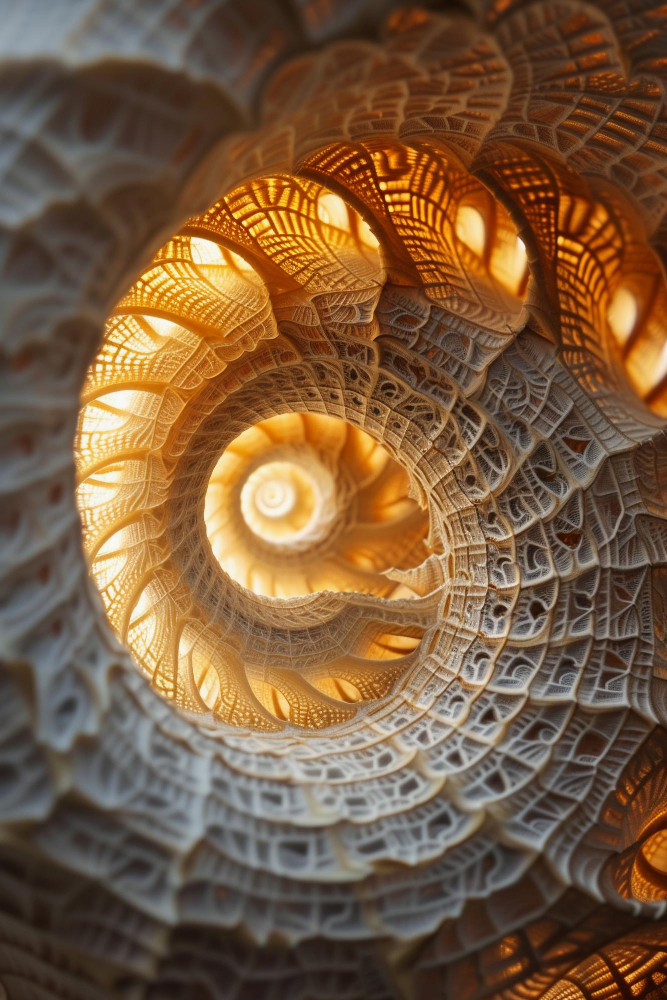
In the study of the Fibonacci sequence and the Golden Ratio, we find the “efficiency of beauty.” The sequence, where each number is the sum of the two preceding ones
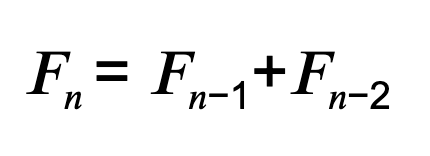
and its ratio φ (approximately 1.618), appear with haunting frequency in phyllotaxis, nautilus shells, and hurricane spirals (cosmic memory)
From a Sheldrakian perspective, the Golden Ratio is the universe’s “favorite habit.” It is the aesthetic peak where energy expenditure is minimized and structural integrity is maximized.
• The Golden Angle: Plants don’t “calculate” the 137.5° angle to optimize sunlight; they resonate with a field of optimal packing that has been reinforced over billions of years of biological history.
• The Morphic Frequency: φ acts as a universal tuning frequency. It is the “path of least resistance” in the morphic field of growth.
Chaos Theory and the Strange Attractor
Chaos Theory provides the mathematical backbone for this “spontaneous” order. In a nonlinear system, such as a weather pattern or a crystallizing drop of water, the system is highly sensitive to initial conditions—the “Butterfly Effect.” However, despite this sensitivity, chaotic systems often settle into a Strange Attractor.
A Strange Attractor is a set of values toward which a system tends to evolve. If we merge Sheldrake’s philosophy with Chaos Theory, we can view a Morphic Field as a biological Strange Attractor.
• The Snowflake Attractor: The infinite variety of snowflakes is a result of chaotic atmospheric variables. Yet, they all orbit the “attractor” of hexagonal symmetry.
• Intelligibility: This is why the world feels understandable. It isn’t that every event is determined, but that every event is “pulled” toward established patterns of beauty. Order is not manufactured; it is expected… a cosmic memory

The Vertical Drama: Form vs. Formless
Andreasen notes that “the moment you touch it, it collapses back into water.” This is the tragedy of the material—the reversal from intricate boundary to the “primordial stuff.” This transition is a localized victory of entropy, but in the Sheldrakian view, the form -cosmic memory, remains in the field.
The snowflake is “manna” because it represents the descent of the Implicate Order (Bohm, 1980) into the Explicate realm. It is a brief, frozen whisper of a deeper reality. Physicist David Bohm argued that the visible universe is just the “unfolding” of a hidden wholeness. Morphic resonance is the mechanism of that unfolding. The beauty of the snowflake is a bridge between the “mud” of the ground and the “pinnacle” of the North—a vertical alignment of matter and meaning.

The Epigenetic Landscape of Beauty
Biologist C.H. Waddington (1957) introduced the concept of the epigenetic landscape, imagining development as a ball rolling down a series of valleys (chreodes). Sheldrake expanded this, suggesting these valleys are shaped by the memory of the past.
When we teach Chaos Theory, we are teaching the geometry of these valleys. When we teach the Fibonacci sequence, we are teaching the most common “valley” in the landscape of life, a cosmic memory. The spontaneous appearance of order is not a miracle in the sense of a law being broken; it is a miracle in the sense of a “habit” being fulfilled.
Academic Synthesis: The Case for Formative Fields
The argument for a non-material organizing principle is supported by a long lineage of systems thinking:
- D’Arcy Thompson (1917): Established that mathematical forms (like the Golden Ratio) are physical constraints that guide evolution (cosmic memory), not just random genetic mutations.
- Stuart Kauffman (1993): Argued that “self-organization” is a fundamental property of complex systems, suggesting that order is “free”—it emerges spontaneously without the need for intensive selection (cosmic memory).
- Brian Goodwin (1994): Proposed that “morphogenetic fields” are as real as electromagnetic fields, providing the “rules” for biological pattern formation (cosmic memory).
- Christopher Alexander (2002): Identified that “life” in structures comes from a recurring set of geometric properties that reflect a “Wholeness” inherent in the universe (cosmic memory).
Conclusion: Beholding the Pattern
The snowflake is matter “knowing” what to do because it is participating in a cosmic memory. Its beauty is not a byproduct; it is the point. By integrating Chaos Theory’s attractors with Sheldrake’s resonance, we find a universe that is not a cold machine, but a living organism that learns, remembers, and repeats its most beautiful moments.
As Andreasen suggests, if we “step back and do not seize,” we are allowed to behold the beauty of cosmic memory. We realize that we are not living in a world of accidental lumps, but in a world of descending forms. The Fibonacci sequence in a sunflower and the hexagonal symmetry of a snowflake are the universe’s way of saying that order is a gift, and beauty is the most persistent habit of all.
Get to know more. Visit my YouTube channel @ https://livingspaark.com/#decode
Endnote Listing (References)
- Alexander, C. (2002). The Nature of Order: An Essay on the Art of Building and the Nature of the Universe. Center for Environmental Structure.
- Andreasen, J. (2026). Snowflakes Make the Modern Mind Nervous. Substack: On Meaning in Nature.
- Bohm, D. (1980). Wholeness and the Implicate Order. Routledge.
- Goodwin, B. (1994). How the Leopard Changed Its Spots: The Evolution of Complexity. Scribner.
- Kauffman, S. A. (1993). The Origins of Order: Self-Organization and Selection in Evolution. Oxford University Press.
- Mandelbrot, B. B. (1982). The Fractal Geometry of Nature. W. H. Freeman and Company.
- Prigogine, I. (1980). From Being to Becoming: Time and Complexity in the Physical Sciences. W. H. Freeman.
- Sheldrake, R. (1981). A New Science of Life: The Hypothesis of Formative Causation. J.P. Tarcher.
- Sheldrake, R. (1988). The Presence of the Past: Morphic Resonance and the Habits of Nature. Times Books.
- Thompson, D. W. (1917). On Growth and Form. Cambridge University Press.
- Waddington, C. H. (1957). The Strategy of the Genes. Allen & Unwin.
- Wolfram, S. (2002). A New Kind of Science. Wolfram Media
TARGET AUDIENCE FOR BLOG
- Philosophers of Science and Metaphysicians
- This group will benefit from the paper’s deep dive into the philosophical intersection of reductionism, intelligent design, and formative causation.
- It provides them with an alternative paradigm to the traditional “blind watchmaker” versus “architectural blueprint” debate by introducing Rupert Sheldrake’s hypothesis of Morphic Resonance.
- They will appreciate the academic synthesis of David Bohm’s “Implicate Order” and the exploration of how cosmic memory redefines the “laws” of nature as habits.
- Complexity Scientists and Systems Theorists
- This audience will find value in seeing Chaos Theory and “Strange Attractors” mathematically and conceptually mapped onto biological and physical memory.
- The text offers an interdisciplinary look at nonlinear systems, demonstrating how order spontaneously emerges from chaos without the need for intensive selection.
- Researchers familiar with Stuart Kauffman’s theories on self-organization or Benoit Mandelbrot’s fractals will enjoy how the paper frames the geometry of natural patterns.
- Theoretical Biologists and Epigenetic Researchers
- Readers in these fields will benefit from the exploration of C.H. Waddington’s epigenetic landscape and Brian Goodwin’s morphogenetic fields.
- The blog offers a refreshing perspective on biological pattern formation, bridging the gap between random genetic mutations and physical, mathematical constraints.
- It directly addresses the mechanics of how organisms might “tune in” to a collective memory to stabilize physical form.
- Sacred Geometry and Mathematical Aesthetics Enthusiasts
- This audience will love the discussion on the “efficiency of beauty” found within natural structures like snowflakes, nautilus shells, and hurricane spirals.
- The paper clearly articulates how the Fibonacci sequence and the Golden Ratio ($\phi$) act as universal tuning frequencies and the “path of least resistance” for growth.
- It validates their interest by proving that geometric symmetry in nature is a functional, structural necessity rather than an accidental byproduct.
- Holistic Architects and Eco-Designers
- Professionals inspired by Christopher Alexander’s architectural essays on how geometric properties reflect an inherent “Wholeness” will find deep structural alignment here.
- The text explains how natural forms minimize energy expenditure while maximizing structural integrity, offering inspiration for biomimicry and sustainable design.
- It provides a conceptual framework for designing spaces and structures that resonate with the universe’s established “habits of form”.
- Spiritual Ecologists and Nature Philosophers
- This reader base will connect deeply with the critique of the “nervous” modern mind and the yearning to view the universe as a living organism rather than a cold, accidental machine.
- The blog offers them a sophisticated bridge between the material world (“the mud”) and a deeper, meaningful cosmic intelligence (“the pinnacle”).
- It provides a poetic yet intellectually grounded framework for understanding natural order as an expected gift and beauty as a persistent habit.

0 Comments