Abstract
This paper examines the cross-cultural cartographies of the afterlife by comparing the Roman Catholic concept of Purgatory with the Tibetan Buddhist tradition of the Bardo delving into the nature of transitional soul. Although arising from divergent theological worldviews—one linear and theistic, the other cyclical and non-theistic—both frameworks map a critical liminal threshold of post-mortem transition.
By analyzing the spiritual mechanics and Jungian archetypes within Dante’s Purgatorio and the Bardo Thodol, this comparative study demonstrates that these intermediate states are profound psychological maps rather than passive waiting rooms.
Key thematic intersections include:
- Radical Self-Honesty: Facing an unvarnished review of one’s karma or sins.
- Fear of Transcendence: Resisting overwhelming divine light in favor of comfortable illusions.
- Collective Interconnectedness: The efficacy of the living assisting the dead.
Ultimately, the essay synthesizes these ancient traditions into modern “technologies of transition,” illustrating how everyday human experiences of grief, trauma, and recovery mirror these sacred landscapes of purification and psychological liberation.
Introduction
Death is the only certainty in life, yet it remains our greatest mystery. Across millennia and vast geographical distances, human cultures have refused to accept that the physical cessation of the body marks the absolute end of consciousness. Instead, we have mapped the “territory” of the afterlife with remarkable detail.
Two of the most profound cartographies of the soul’s post-mortem journey are the Roman Catholic concept of Purgatory and the Tibetan Buddhist concept of the Bardo, specifically as detailed in the Bardo Thodol (The Tibetan Book of the Dead).
While one arises from a theistic, linear worldview and the other from a non-theistic, cyclical one, both describe a liminal space—a threshold between states. This essay explores the spiritual mechanics and the psychological archetypes of these two intermediate states, arguing that they are not merely “waiting rooms” for the dead, but profound psychological maps for the transformation of the living.
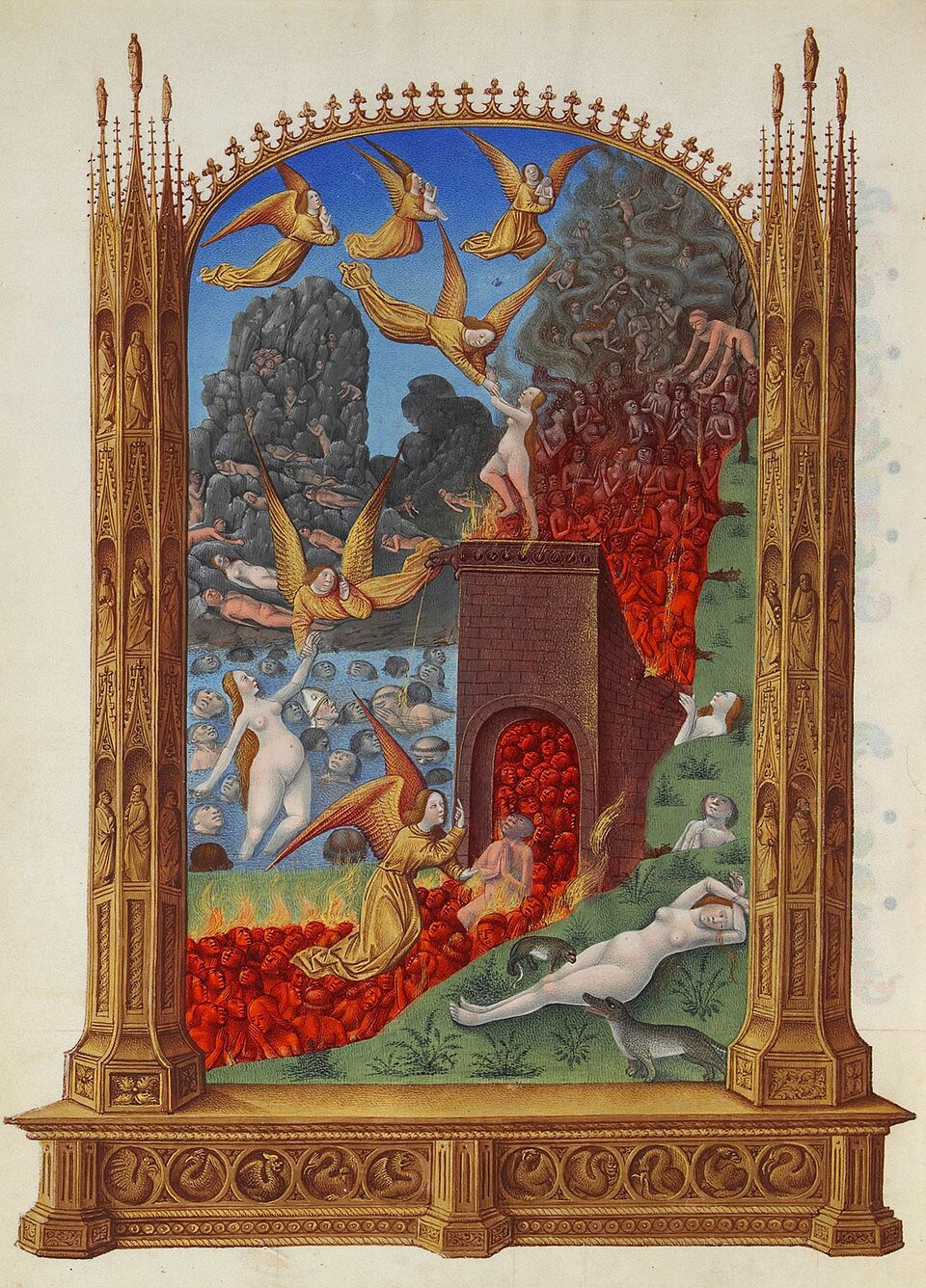
Purgatory: The Fire that Heals
In the Western Christian tradition, specifically Roman Catholicism, Purgatory is often misunderstood as a “mini-hell” or a second chance for the wicked. Theologically, it is neither. It is the state of those who die in God’s grace but are still imperfectly purified.
The Spiritual Dimension
The root of the word is purgare—to make clean. The doctrine suggests that while forgiveness is granted, the attachment to sin remains. A soul cannot enter the absolute presence of the Divine while clinging to the ego, selfishness, or minor transgressions.
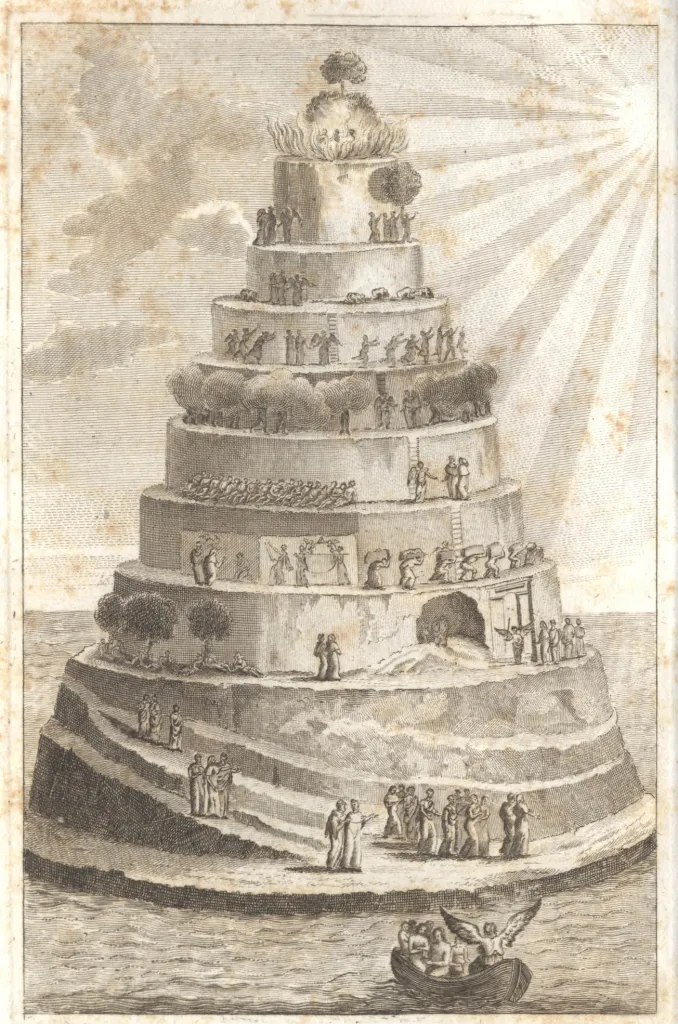
Dante Alighieri, in his Divine Comedy, visualized Purgatory not as a pit, but as a mountain. Souls climb upward, labouring through their specific vices (pride, envy, wrath) to reach the Earthly Paradise at the summit. Here, the suffering is not punitive in a vindictive sense; it is restorative. It is the pain of re-setting a broken bone so it may heal correctly. The “fire” of Purgatory is the burning love of God, incinerating the dross of the self so that only the gold remains.
The Psychological Dimension
Psychologically, Purgatory represents the process of integration and grief. When we experience a “death” in life—the loss of a job, a relationship, or an identity—we often enter a psychological purgatory. We are no longer who we were, but not yet who we will become.
- The Burn of Guilt: Purgatory validates the human need for penance. Psychologically, “cheap grace” (forgiveness without change) rarely heals trauma. We often feel a need to “pay off” our psychological debts to feel whole again.
- Hopeful Suffering: Unlike Hell (despair) or Heaven (fulfilment), Purgatory is defined by hopeful suffering. It frames pain as purposeful. In therapy, this parallels the difficult work of confronting trauma: it hurts, but it is the hurt of healing rather than the hurt of injury.
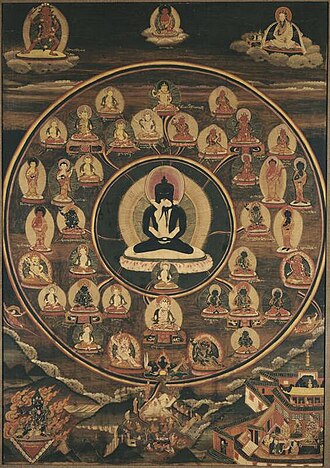
The Bardo: The Gap Between Moments
Travel East to the Himalayas, and we find the Bardo Thodol (literally, “Liberation Through Hearing During the Intermediate State”). In Tibetan Buddhism, death is not a finale but a transition.
The Spiritual Dimension
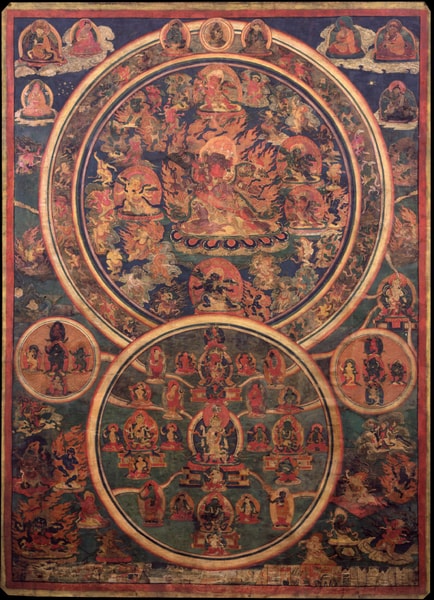
The “Bardo” refers to the gap between the separation of consciousness from the body and its subsequent rebirth into a new form. This period typically lasts 49 days. The text is a guidebook read to the dying or recently deceased to help them navigate the hallucinations and projections they will encounter.
The journey moves through three main stages:
- Chikai Bardo: The moment of death. The experiencer encounters the “Clear Light of Reality.” If recognized, they achieve liberation (Nirvana) instantly. Most, however, flee from the brightness in fear.
- Chonyid Bardo: The state of reality. Here, the consciousness sees peaceful and wrathful deities. The critical teaching is that these deities are not external gods; they are projections of one’s own mind.
- Sidpa Bardo: The state of rebirth. As karma reasserts itself, the soul feels the pull of desire and is drawn toward a new womb and a new life.
The Psychological Dimension
Carl Jung, the father of analytical psychology, was fascinated by the Bardo Thodol, calling it a “psychological commentary” of the highest order.
- Confronting the Shadow: The “Wrathful Deities” that appear in the Bardo—drinking blood, terrifying in visage—are archetypal representations of our own repressed anger, lust, and ignorance. The text teaches that if you realize the monster is you, it loses its power. This is the ultimate Shadow Work.
- The Illusion of Reality: The Bardo teaches that our current reality is also a Bardo—a gap between past and future. Psychologically, this suggests that our anxieties are projections. We create our own heavens and hells through perception.
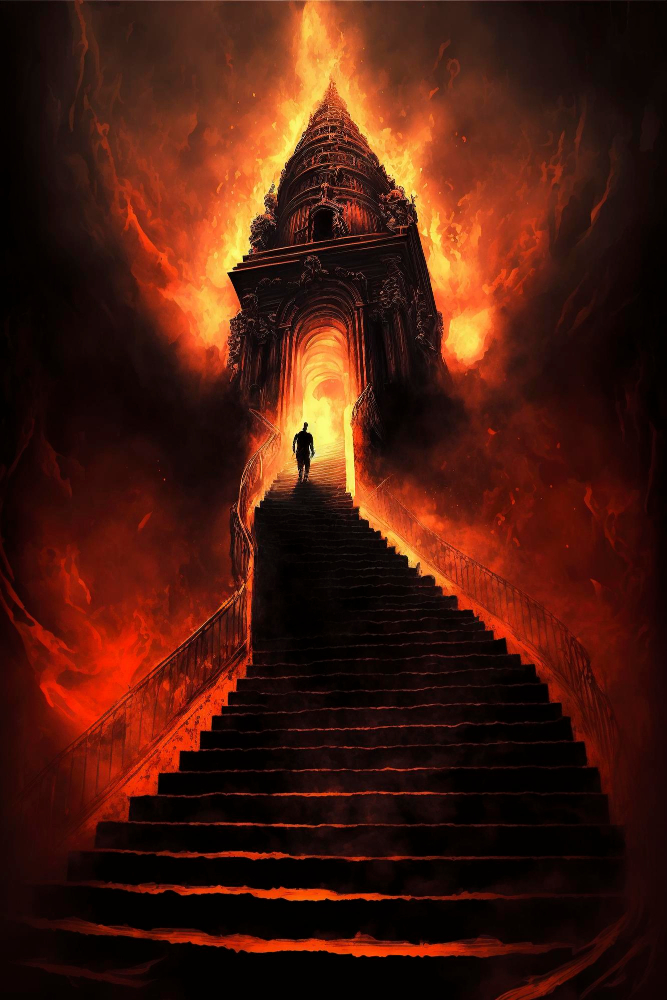
Comparative Analysis: Bridges Across Worlds
Despite their theological divergence—one posits a Creator God and a linear soul, the other a Karmic law and a fluid consciousness—the parallels are striking.
- The Review of the Self
In Purgatory, the soul sees itself clearly in the light of Truth, recognizing its flaws. In the Bardo, the “Lord of Death” holds up a mirror of karma where every deed is reflected.
- Psychological Insight: Both traditions insist that total self-honesty is the prerequisite for moving forward. You cannot repress or hide in the afterlife.
Both traditions describe the Divine/Truth as an overwhelming Light.
2. The Role of Fear and Light
- Christianity: The soul in Purgatory aches for this Light but knows it is not ready to withstand its intensity.
- Buddhism: The consciousness in the Bardo is terrified of the Clear Light and prefers the dim, soft lights of the six realms of existence (which lead back to suffering).
- Psychological Insight: We often fear our own potential. We fear the “light” of total responsibility, preferring the “dim light” of our comfortable neuroses and habits.
3. The Efficacy of the Living
Both traditions emphasize that the dead are not isolated.
- Catholics offer Masses and prayers for the “Poor Souls” to shorten their time in Purgatory.
- Buddhists read the Thodol to the deceased to guide them through the Bardo.
- Psychological Insight: This speaks to the collective unconscious and the bonds of grief. We are entangled with one another. Our love and intention can act as a stabilizing force for others, even across the threshold of death.
| Feature | Christian Purgatory | Tibetan Bardo |
| Goal | Purification for entry into Heaven | Recognition of mind for Liberation |
| Nature of Time | Linear (End of history) | Cyclical (Wheel of Samsara) |
| Main Obstacle | Unresolved Sin / Attachment | Ignorance / Karmic Illusion |
| Outcome | Eternal Union with God | Nirvana or Rebirth |
| Psychological Key | Purification of the Will | Lucid Awareness |
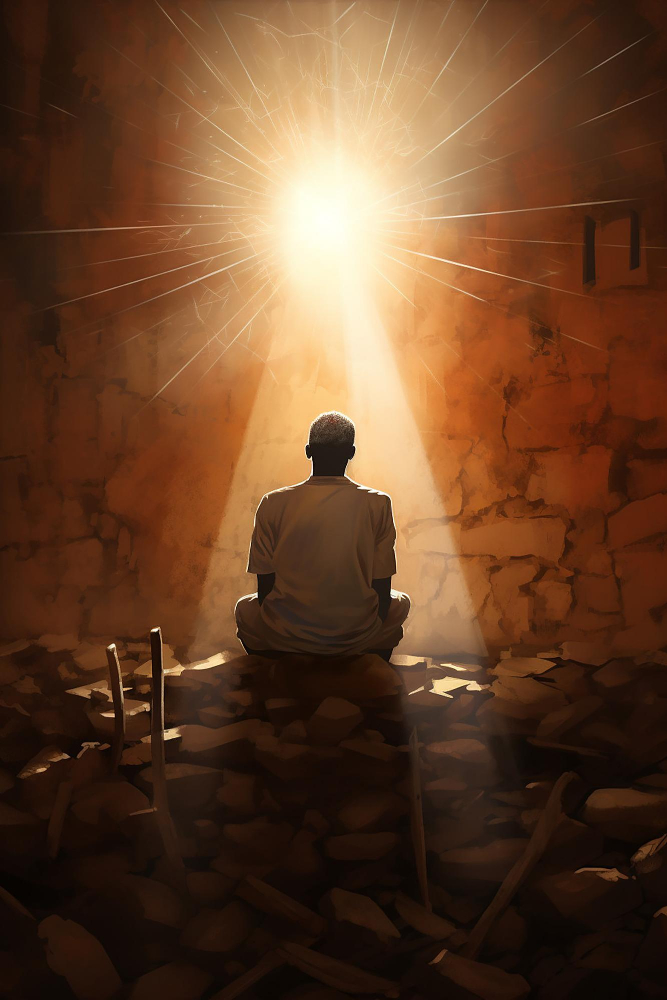
Synthesis: Why This Matters Now
Why should a modern reader, perhaps secular or agnostic, care about ancient maps of the afterlife? Because we die many times before our final breath.
We go through the Bardo of a breakup, where we are stuck between an ex-partner and a single life, haunted by wrathful deities of jealousy and peaceful deities of nostalgia. We go through the Purgatory of addiction recovery, where we must “burn off” the impurities of chemical dependency, suffering withdrawal to achieve the “heaven” of sobriety.
These ancient texts offer us a “technology of transition.” They teach us three vital lessons for living:
- Let Go: In Purgatory, you must let go of sin. In Bardo, you must let go of the body. Attachment is the anchor that keeps us stuck in the dark.
- Stay Awake: The Bardo constantly reiterates, “Do not be distracted.” Mindfulness is the tool that navigates chaos.
- Face the Monster: Whether it is a wrathful deity or a stain on the soul, the only way out is through.
Conclusion
Purgatory and the Bardo are not merely geographic locations on a spiritual map; they are states of mind. They remind us that the transition from ignorance to wisdom, from brokenness to wholeness, requires a “middle phase.” It requires a time of waiting, of burning, of seeing, and eventually, of liberating.
Whether you view these concepts as literal destinations or psychological metaphors, their message is the same: Death is not a wall, but a door. And the key to opening it lies in how we cultivate our consciousness right here, right now.
References
- Alighieri, Dante. The Divine Comedy: Purgatorio. Translated by John Ciardi. New American Library, 2003.
- The Bible. (NRSV Catholic Edition). 1 Corinthians 3:15 (Reference to “saved, but only as through fire”).
- Evans-Wentz, W.Y. (Trans.). The Tibetan Book of the Dead: Or The After-Death Experiences on the Bardo Plane. Oxford University Press, 2000.
- Fremantle, Francesca & Trungpa, Chögyam. The Tibetan Book of the Dead: The Great Liberation Through Hearing in the Bardo. Shambhala Publications, 1975.
- Jung, C.G. “Psychological Commentary on The Tibetan Book of the Dead.” In Psychology and the East. Princeton University Press, 1978.
- Lewis, C.S. The Great Divorce. HarperOne, 2001. (For a modern theological take on the solidity of Heaven vs. the phantom nature of Hell/Purgatory).
- Thurman, Robert. The Tibetan Book of the Dead: Liberation Through Understanding in the Between. Bantam, 1994.
Know more about science and spirituality in our YouTube channel – Decode
TARGET AUDIENCE FOR BLOG
- The Mythological Seeker (The Mythology Pillar)
- Who they are: Readers fascinated by comparative mythology, ancient texts, and how human cultures across centuries map the unseen.
- Why this post hooks them: They will love the cross-cultural deep dive comparing Western Christian imagery (Dante’s Purgatorio) with Eastern esoteric text (Bardo Thodol). It satisfies their hunger for rich, symbolic storytelling and historical lore.
- The Cognitive Explorer (The Cognitive Pillar)
- Who they are: Individuals focused on mental frameworks, Jungian psychology, shadow work, and understanding how the mind constructs reality.
- Why this post hooks them: The post reframes terrifying spiritual entities and hellish fires as psychological projections of the subconscious mind. Concepts like “The Illusion of Reality” and using mindfulness to navigate internal chaos will appeal directly to their desire for mental mastery.
- The Philosophical Thinker (The Philosophical Pillar)
- Who they are: Intellectuals who ponder existential questions, the nature of time (linear vs. cyclical), the meaning of suffering, and the definition of truth.
- Why this post hooks them: The comparative analysis of how different traditions view “the light of total responsibility” versus the “dim light of comfortable neuroses” provides deep philosophical meat for them to chew on. It challenges them to think about how perception shapes their existence.
- The Empowered Spiritualist (The Spiritual & Empowerment Pillar)
- Who they are: Your core audience looking for practical, actionable wisdom to transform their daily life, heal from trauma, and navigate tough transitions.
Why this post hooks them: This group will jump straight to your synthesis section. They need to hear that a breakup, a career shift, or recovery from addiction is a “modern Bardo”—a liminal space that requires them to Let Go, Stay Awake, and Face the Monster to achieve personal liberation.

This would be my initial message here and I’m happy I came across this community. I’ve already learned a few useful insights just from reading existing posts, which really says a lot about the quality of the content. It’s refreshing to see people open to explain what’s worked for them and break things down in a way that’s easy to understand. I’m looking forward to continuing to follow along. I have lately been learning about this over the past little while.
Thank you for your appreciation and feedback.