

While rummaging through the family archives the other morning, I happened to unearth a digital document bearing the rather dramatic title, “Water Water everywhere but Not a Drop to drink.docx”. It set the old memory juices flowing, I can tell you. To fully appreciate the sheer, unadulterated drama of what we in the family circle still refer to as the Great Water Crisis, one must first picture the scene of our initial rustication. My venerable dad—the Governor, to use the familiar phrase—held undisputed sway as the headmaster of a middle school in a rather remote village.
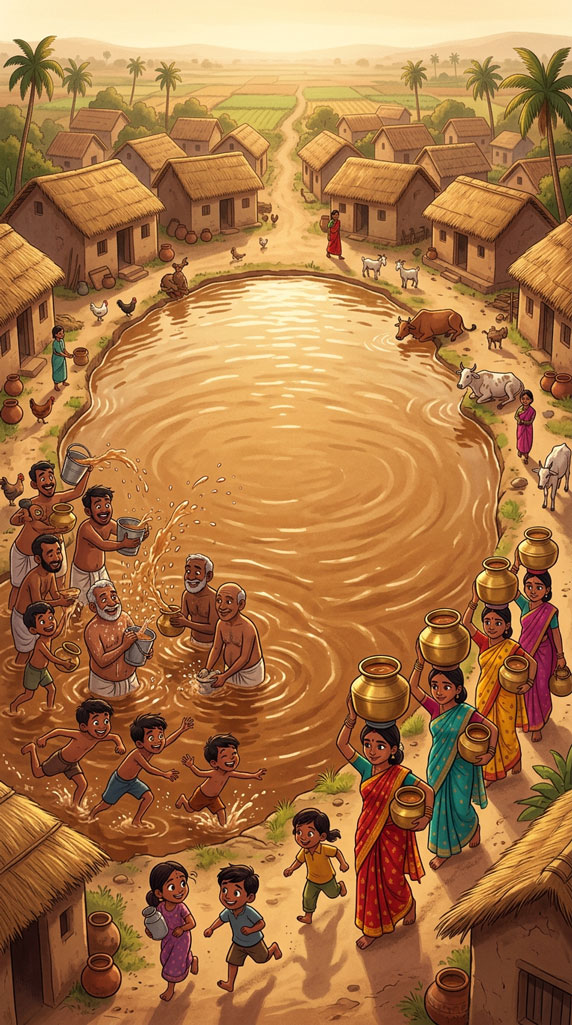
Plonked right in the dead centre of this rural hamlet was a magnificent lake. Now, when I say magnificent, I do not mean it resembled the crystal-clear, sparkling waters one encounters while taking in the air in the Swiss Alps. Far from it. This particular body of water possessed a distinct, heavily saturated chocolaty, buttery hue. To the untrained eye of a casual passerby, it looked precisely like a colossal bowl of cold mulligatawny soup; however, to the local populace, it was the absolute centre of the universe. It was our singular, life-giving entity.
The social etiquette governing this soup-like lake was remarkably rigid:
- The Gents and Lads: Gathered upon the banks in various stages of undress, vigorously hoisting buckets of the buttery fluid outward to perform their daily bathing rituals in the open air.
- The Ladies and Girls:Tasked with the far more gruelling, spine-straining labour of hauling the stuff back to the domestic privacy in heavy brass vessels for the purposes of drinking, bathing and cooking.
Occasionally, when the mountain of dirty laundry reached truly Himalayan proportions, or the weekly ritual of the head bath demanded an absolute deluge of moisture, the local ladies would form what can only be described as a Formidable Syndicate. They would trudge out in a great, gossiping military column to the distant ponds scattered around the agricultural fields. To alleviate the sheer, unmitigated drudgery of the trek, they cleverly turned the whole expedition into a festive gala, concluding the arduous laundry session with a thoroughly joyful, splashing swim around the pool. It was a spectacle of rural solidarity that would have brought a tear to the eye of a social anthropologist.
The Summer of Our Discontent
Every so often, the local weather gods would completely misplace the instruction manual for the monsoon, and a severe paucity of rain water would plunge the entire village into the harshest of summers. During these grim water averse periods, the great lake would dry up entirely, transforming into a cracked, dusty basin resembling a giant, over-baked biscuit.
At this juncture, the village engineering brains—clever chaps who possessed an uncanny, almost mystical knowledge of the secret topography of underground water springs—would descend into the dry lakebed like gold prospectors in the Yukon, digging deep, precarious pits. These tiny, makeshift water wells of precious moisture were treated with the sort of trembling reverence usually reserved for the British Crown Jewels.
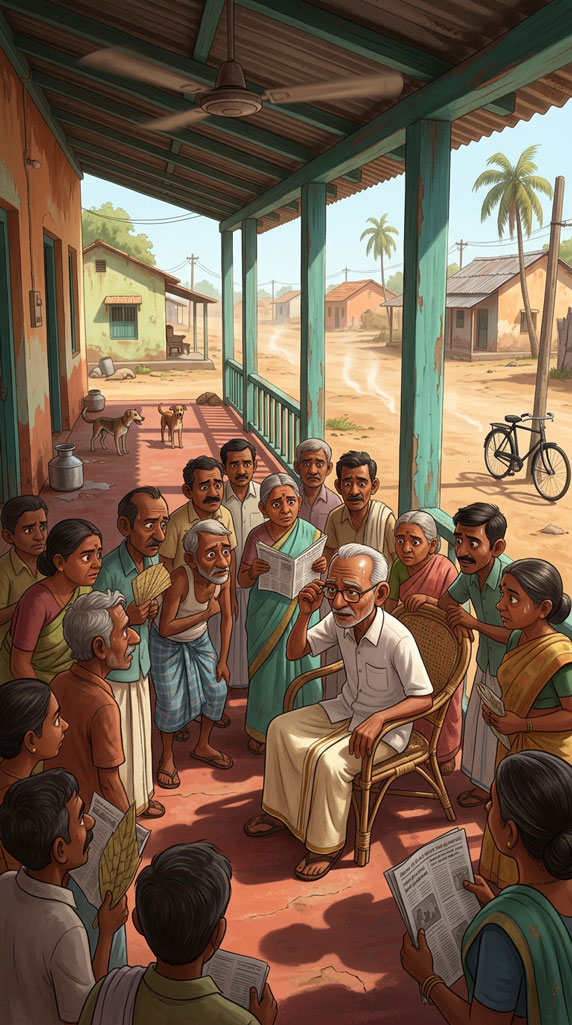
As the summer reached its absolute zenith and the blazing heat began to literally melt the leather soles of one’s boots, the village collectively decided that human ingenuity had exhausted its options. It was time to bypass earthly channels and appeal directly to a Higher Authority. Consequently, a massive, sweating delegation descended upon the Governor’s veranda to seek his educated counsel.
My dad, adjusting his spectacles with the immense gravity of a Prime Minister handling a delicate international crisis, delivered his ultimate terms:
“If this spiritual ritual is to possess any potency whatsoever, there must be an absolute cessation of domestic hostilities. No animosity, no petty bickering, and absolutely no glaring at one’s neighbours over the garden fence! And furthermore, this campaign continues without intermission until the sky opens up!”
What followed was a midnight operation of the absolute first order.
The Midnight Raid and the Laos Reminiscence
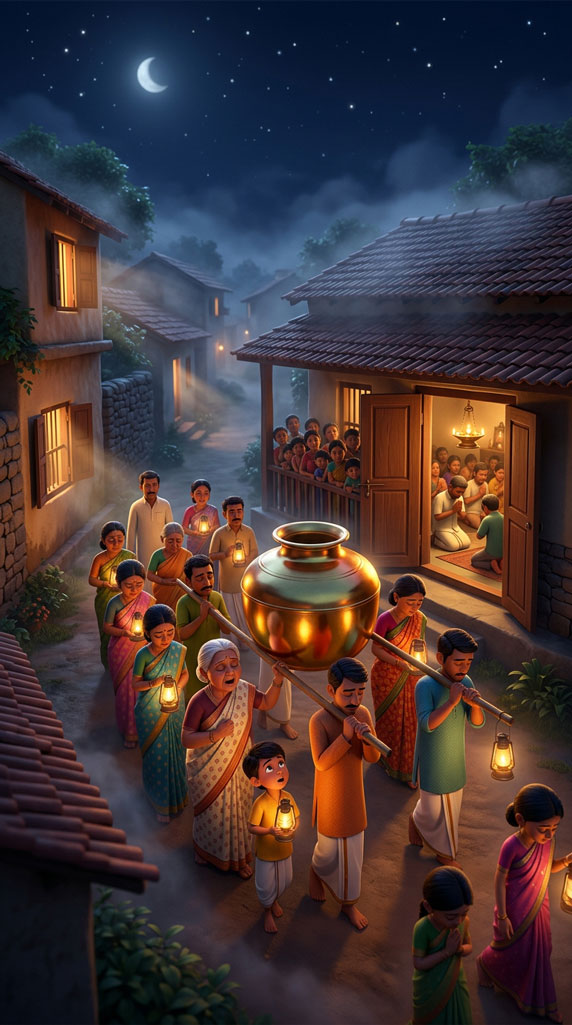
After a hasty, somewhat tense dinner at home, the ritual procession of begging commenced under the cover of darkness. Armed with a colossal brass vessel meant to hold the community’s collective alms, the devout gang marched through the pitch-black streets, singing a soaring, haunting hymn dedicated to Mother Mary and Jesus to plead for water.
The tactical strategy of this midnight operation was simple yet deeply theatrical:
- The entire procession would file solemnly into a neighbour’s house, kneeling in the main hall or crowding onto the veranda, depending entirely on the available square footage of the property.
- A grand, multi-layered petition was launched, directed straight at the Almighty, imploring Him to fertilize the parched lands, fill the local granaries to bursting, bless the village children and provide plenty of water.
- In exchange for these immediate material blessings, the group piously promised lifelong, unwavering service to the Lord.
At the conclusion of this intense spiritual negotiation, the lady of the house would inevitably appear from the shadows, bearing a magnificent offering of mixed rice thoroughly doused in rich vegetarian gravy. With the solemnity of a high priestess performing a sacred rite, she would cross the begging vessel and push the food inside.
The Laos Reminiscence:
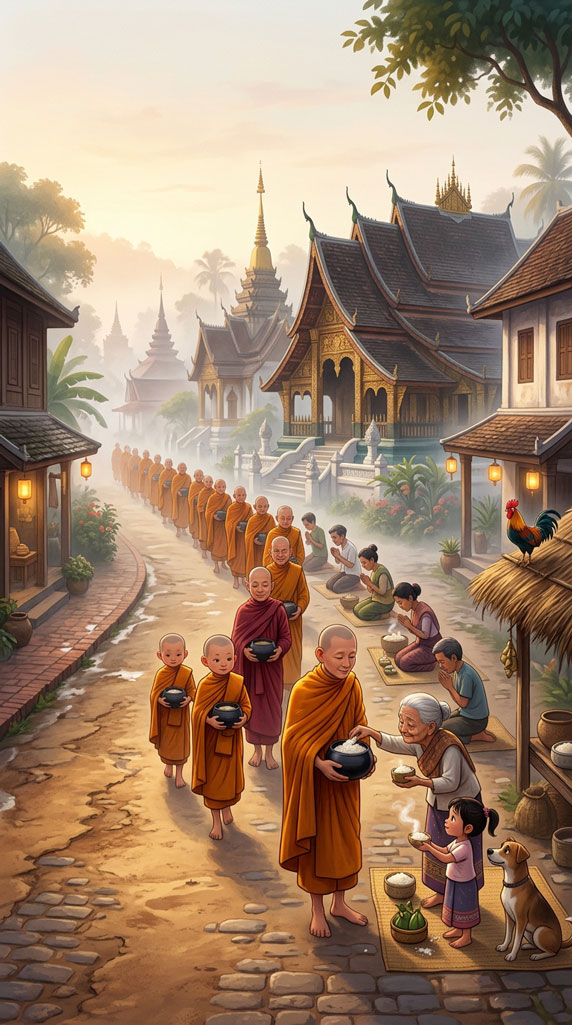
This entire midnight performance, I must note, vividly recalled a jaunt I once took to the capital of Laos, Luang Prabang. Fascinating place, Laos. Thoroughly communist on paper yet absolutely teeming with ancient Buddhist monasteries. The monks—both male and female, who strictly adhere to a rigorous “one meal a day” philosophy—prowl the streets at the crack of dawn with their begging bowls. The local populace kneels meekly in the dust, humbly filling the vessels with an absolute abundance of food. A rummy parallel, what?
By the time our pious gang had systematically raided every single kitchen in the village, it was well past midnight. The procession then moved with rhythmic chanting to the dry lake, where water from the secret pits was carefully collected and sprinkled across the parched earth.
Then came the true pièce de résistance: the village elders thoroughly mixed the mountain of collected rice and handed a giant, glorious, gravy-soaked ball of it to every single soul present. For us children—the “Royal Gang,” as we proudly fancied ourselves—it was nothing short of a magnificent midnight picnic. Carried high on the sturdy shoulders of our elders, we would leap down to partake in this splendid second supper. And whether by direct divine intervention or sheer, dogged persistence, the iron faith of the village invariably brought the rain down, sooner or later.
The Great Exodus and the Housewarming Catastrophe
Change, however, was in the wind. As the family brood grew older, the Governor decided it was high time to migrate to the nearby town so the elder children could pursue higher academic studies. By a stroke of absolute, unadulterated luck, he secured a prestigious position at a highly regarded school and hired a spacious house boasting what we thought was the ultimate luxury: a private well in the backyard.
The sisters were absolutely beside themselves with joy, and the new house practically echoed with their operatic cheers:
- “Ha ha! Off to our brass vessels!” shouted one.
- “No more running to the muddy lake!” echoed the second.
- “No more long, agonizing marches to the distant ponds!” they chorused together, throwing their hands into the air and shouting, “Adios, Amigos!”
It was a beautiful dream of domestic luxury—a grand water source right at our back door! Of course, none of us were short-sighted enough to shout, “No more begging bowls at night,” for we all secretly knew that those adventurous, ghost-story-filled midnight escapades had been the finest, most thrilling part of village life.
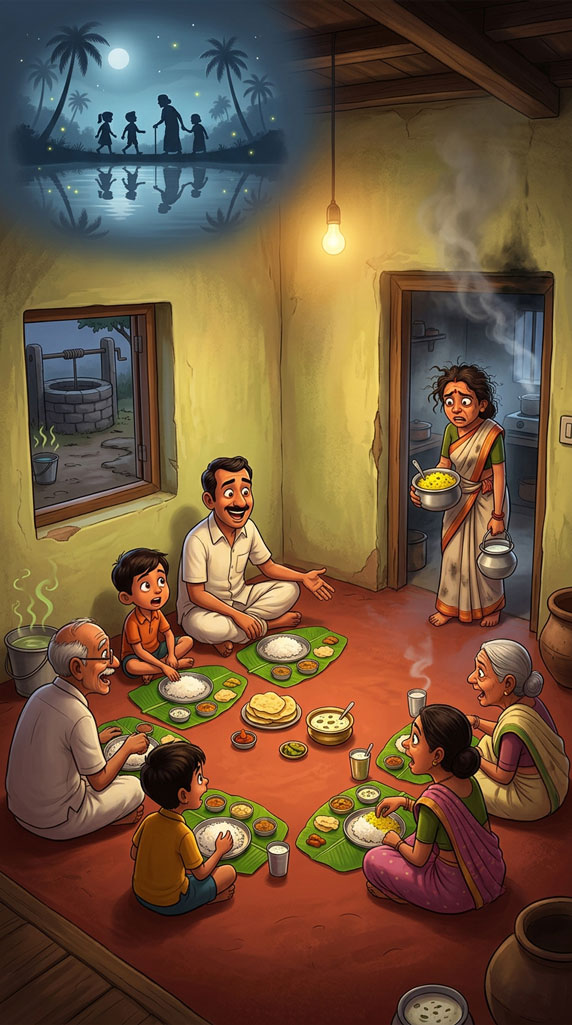
On our very first day in the new town residence, we assembled in the dining hall, our mouths watering in keen anticipation of a classic housewarming feast. We were fully expecting the absolute works: hot rice, aromatic Sambar, cooling buttermilk, crispy pappads, and a sweet, creamy payasam to mark the auspicious beginning of our urban chapter.
Instead, Amma emerged from the kitchen looking thoroughly depressed, like a woman who had just backed a string of losers at the races. She distributed a portion of rice that had turned a shocking, vibrant shade of yellow, bearing an uncanny and deeply suspicious resemblance to lemon rice.
“We will have buttermilk alone today,” she announced grimly.
We stared at her, utterly flabbergasted. Was mother ill? Had we accidentally committed some terrible, inauspicious blunder on day one?
Amma sighed, gesturing tragically toward the backyard. “The well at the back looks magnificent, yes. But the water is utterly, hopelessly, violently brackish.”
The culinary consequences, it turned out, were absolute chaos:
| The Ingredient | & The Catastrophic Result |
| The Rice | Turned an unappetizing, vibrant yellow the moment it was boiled. |
| The Dal | Stubbornly refused to disintegrate into a paste, rendering Sambar impossible. |
| The Milk | Curdled and spoilt instantly upon contact with the well water, ruining the payasam. |
“So,” Amma concluded with a heavy heart, “enjoy your yellow buttermilk rice and pappad as the specialty of the day!”
Dragon of the Bungalow
We were thoroughly chastened. A solution had to be found, and fast, if we were to avoid dying of terminal culinary boredom. Fortunately, one of dad’s new school colleagues dropped a bit of vital intelligence. It appeared there was a grand, palatial bungalow nearby possessing a private well of legendary quality, with water that tasted like pure, sweet tender coconut.
Naturally, there was a catch. In these matters, there is always a catch.
The owner of this bungalow was a retired chap of the most terrifying, fire-breathing description. A man of iron, military-grade discipline, he enforced two draconian rules with absolute ferocity:
- Every household was permitted exactly one pitcher of water per day. No more, no less.
- Absolutely no men were permitted inside the gates under any circumstances whatsoever.
The household was instantly plunged into a deep, agonizing dilemma. How on earth was a family of our substantial size supposed to survive on a single pitcher of water a day? The youngest among us, displaying a lamentable lack of geographic awareness, piped up: “Can we bring water from our old village lake?”
Despite the grim circumstances, the room erupted into hollow laughter. We decided to salvage what we could of our dignity and at least secure that solitary single pitcher.
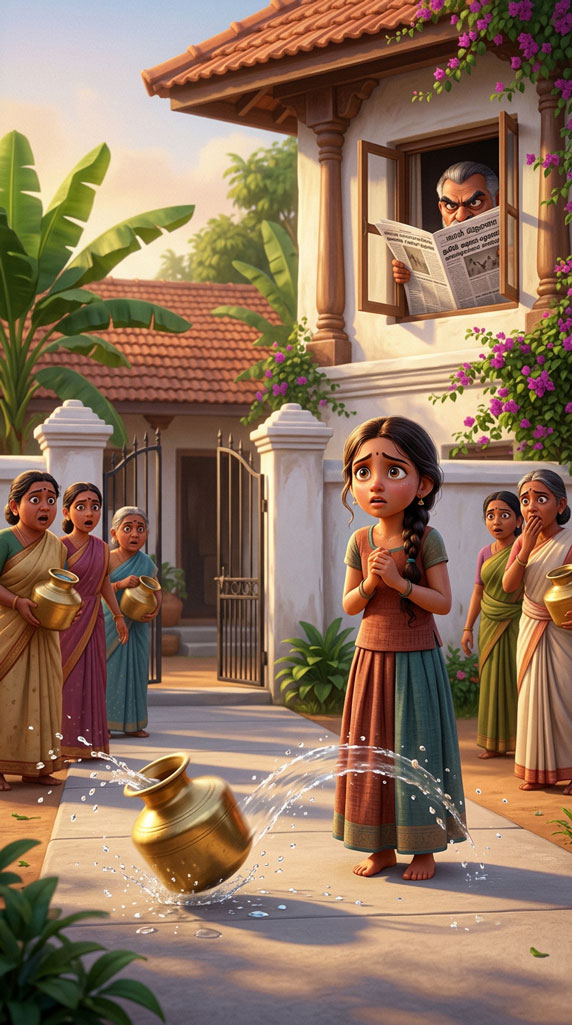
With her heart doing a frantic, terrified tap-dance against her ribs, my elder sister—a young thing of about thirteen—approached the ominous gates of the bungalow and knocked.
The watchman threw the iron gate open and barked a terrifying command: “One pitcher, girl!”
My sister nodded meekly and stepped onto the pristine, gleaming cement pathway. A few local ladies were already filing out, looking like defeated soldiers carrying their solitary water allowances. Suddenly, as my sister neared the main veranda of the house, a sharp rustling sound echoed from an open window. Someone hidden inside was turning the pages of a newspaper.
In her absolute terror, my sister’s nerves completely gave way. Her hands slipped, and the heavy brass pitcher tumbled from her grasp, going down the cement path with a deafening, echoing clatter-clang-roll that could have awakened the dead.
From behind the newspaper, a thunderous, authoritative voice roared: “Who is there?!”
My sister, trembling like a leaf in a gale, folded her hands piously, looked up at the window, and squeaked a faint, desperate, “Namasthe, appa.”
The Ogre of the Bungalow lowered his paper. He looked down at this terrified, trembling thirteen-year-old girl, took a long, measured breath, and surprisingly, his booming voice softened into something entirely pacifying. “Are you new to this place, girl? Where on earth are you from?”
Encouraged by this sudden and welcome lack of immediate decapitation, my sister let loose the entire, sprawling family saga. She started from our idyllic, mulligatawny-lake village life, moved on to her dad’s new prestigious teaching job, and detailed the utter domestic tragedy of the brackish backyard well and the bright yellow rice.
The old gentleman listened with profound, silent intent. “Have you got a younger sister?” he inquired calmly.
“Yes, appa. She is ten years old.”
“Splendid,” the old man said with a decisive nod. “Go home, fetch your sister, bring another pitcher, and both of you can take as much sweet water as you could possibly need.”
My sister didn’t wait to be told twice. She turned on her heels and ran all the way home, arriving utterly breathless, wild-eyed, and entirely sans her brass pitcher. The anxious family was instantly terrified, assuming the old tyrant had beaten her, confiscated our precious vessel, and chased her off the property. But between frantic gasps for air, she revealed the miraculous turn of diplomatic events.
Within minutes, the two sisters were sprinting back to the bungalow, armed with a second pitcher. Another polite, synchronized “Namasthe, appa” officially cemented the treaty.
“Good girls,” the old gentleman beamed warmly from his window. He pointed a wrinkled finger toward a magnificent shrub bursting with vibrant red blossoms. “Take one big Ixora flower from that plant.”
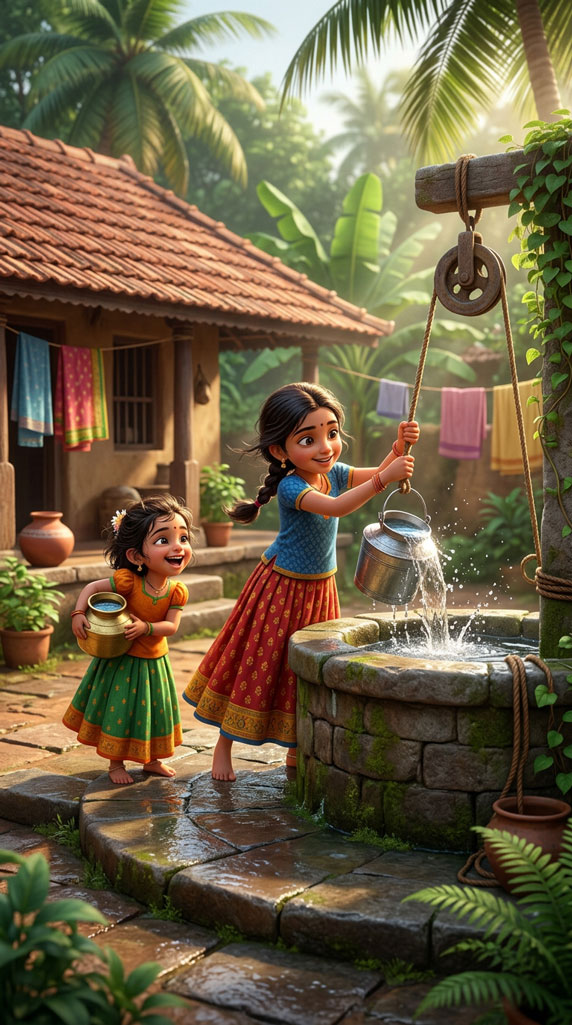
The girls were absolutely delighted. And thus, a beautiful, daily diplomatic relationship was firmly established, defined by sweet coconut-tasting water and bright red Ixora flowers. It was a grand, elegant arrangement that kept the family perfectly hydrated and happy until that glorious day when the Kumbakonam Municipality finally intervened, laying down proper pipes to provide our house with the sacred, endless waters of the Kaveri River.
Like the goodness of life giving water, enjoy this story.
Access a lot more stories from our weekly video blog on our YouTube channel – https://livingspaark.com/#MD

0 Comments